

School goes back, and the afternoons come back empty. The sun is still high over the bay, the water is still warm, and the trails above town are dry. Most clubs and academies around here only open their term weeks later. We have run after-school outdoor programs in Cascais since 2014, and this is what we have watched happen.
In short
The weeks between the first day of school and the first day of activities usually set the routine for the whole term.
Settle the weekly activity early and the rest of the year is easier. See the After School page
The September gap
The gap is not really a Portuguese quirk. Schools open first, providers wait for enrolments to firm up, and term programs follow. Meanwhile the days are long and the coast is at its best on a weekday afternoon.
Those weeks matter more than they look. Whatever fills the hours between pick-up and dinner in September is usually still filling them in February. Sometimes that is a bike. More often it is a tablet.
We have seen it go both ways. Families who settle the weekly activity in the first days of term rarely have to renegotiate it in November. Leave it to October and you are up against a habit that has already moved in.
The other September problem is choice. Local platforms list thousands of options, and schools hand out a booklet with a dozen more. The rest of this guide is meant to shrink that list.
What we have seen, and what the research says
Three things come up again and again, in our groups and in the research.
Movement helps focus. Coaches see it in the second half of a session, and parents tell us the same thing about homework and bedtime. It is less about burning energy off and more about arriving at the evening already settled. The World Health Organization asks for 60 minutes of activity a day, and that is the one number worth carrying around.
Screens and movement compete for the same afternoon. They are not two separate parts of the day, they are the same hours spent one way or the other. Once the screen owns those hours, winning them back is hard work for everyone.
Not all movement does the same job. The sessions that change a child most are the ones that ask for decisions. Reading a wave, choosing the next hold, picking a line down a rocky trail. Repeating the same drill is easier to run and it does less.
Before you sign up: a quick checklist
Parents who have been through a few school years end up asking the same practical questions. Use them on us as much as on anyone else. Here is the short version.
Do this
- Ask who will be with the group, and how the afternoon is supervised on the water, on the rock and on the trail
- Ask for specifics, and treat a clear, concrete answer as a good sign
- Choose a fixed weekly slot rather than something you have to juggle
- Check whether school pick-up and gear are included
- Book one paid session before committing to a term
- Ask what happens on a rainy afternoon
Avoid this
- Choosing from a booklet photo instead of talking to the coach
- Adding a third afternoon pick-up to a week that already has two
- Leaving the decision until October
Different environments, different challenges
There is no right age for a sport. We form groups by age, level, experience and how the group works together, and the challenge is adapted from there. After School works mostly from age 6, and some 5-year-olds join after a quick assessment. What changes most between our programs is not difficulty, it is the environment a child learns to deal with.
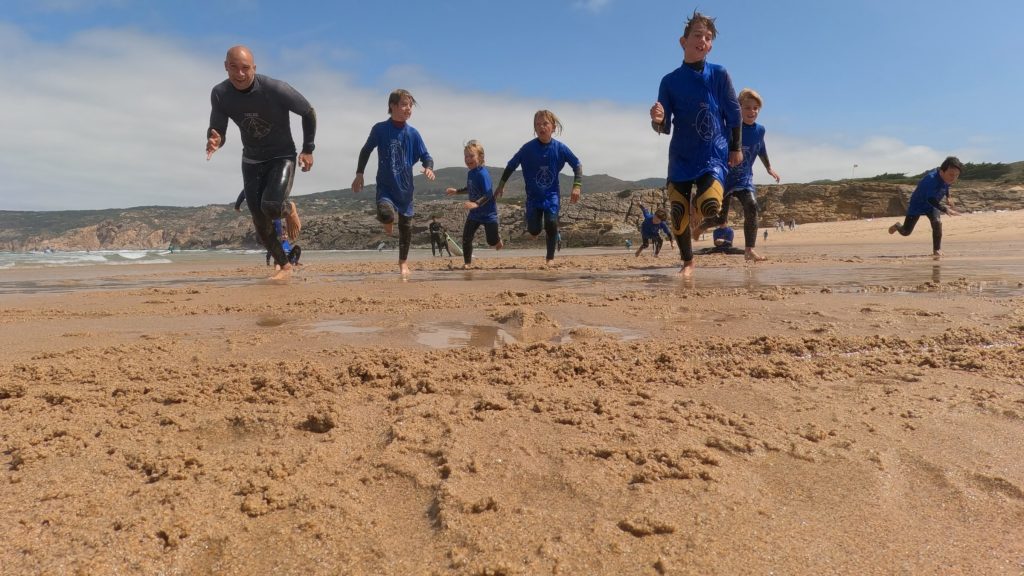
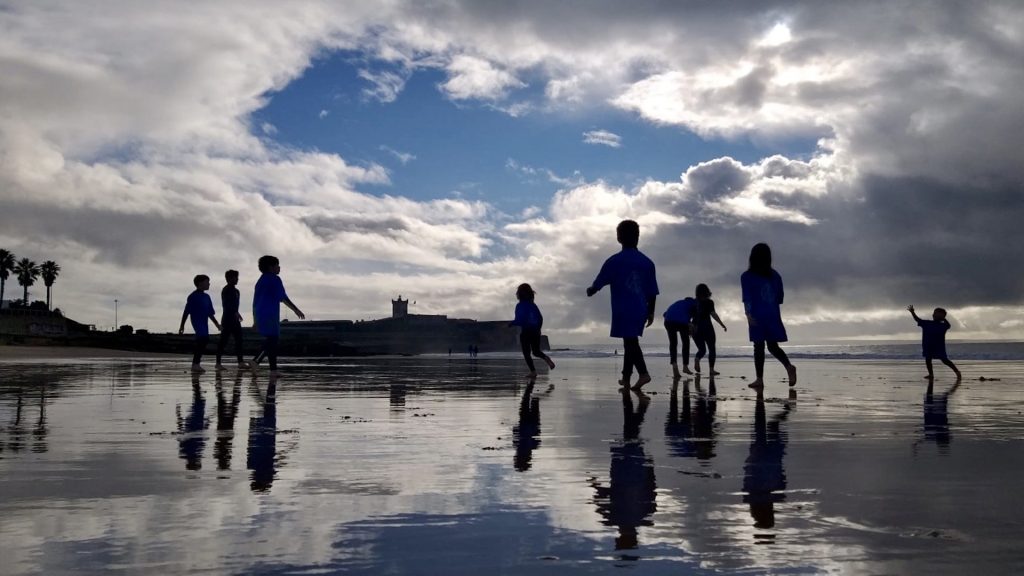
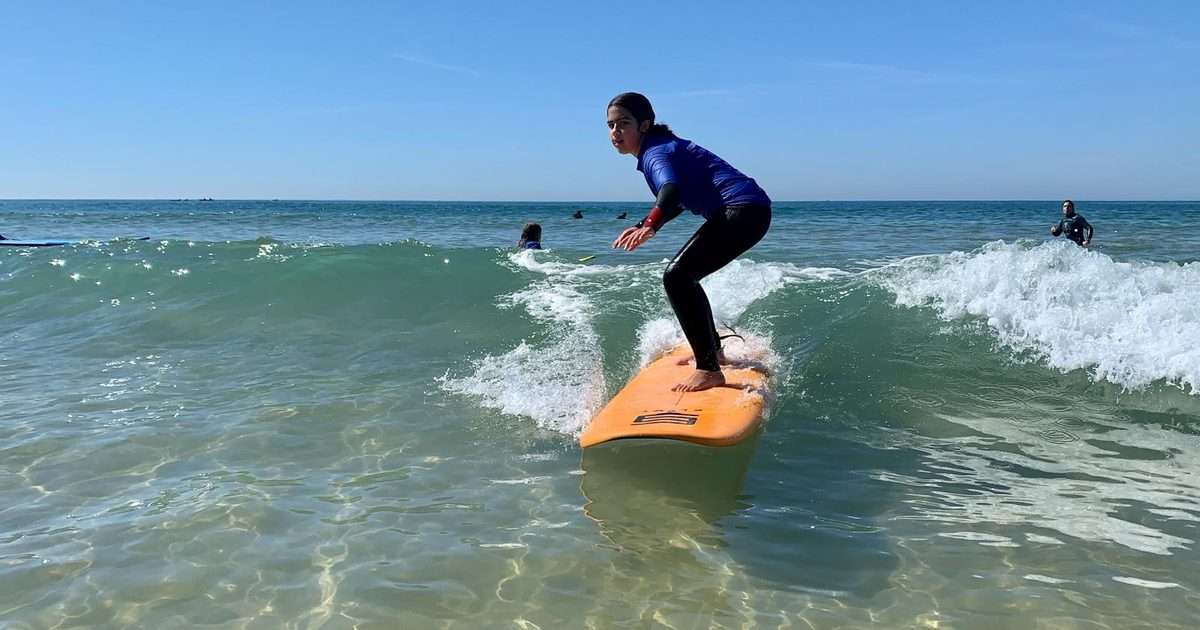
Surf and water activities. The sea is never the same twice, so a child has to read it and decide, again and again. Balance, timing and a fair amount of patience come with that. Swimming is not a requirement to start, because coaches adapt where and how each child works in the water.
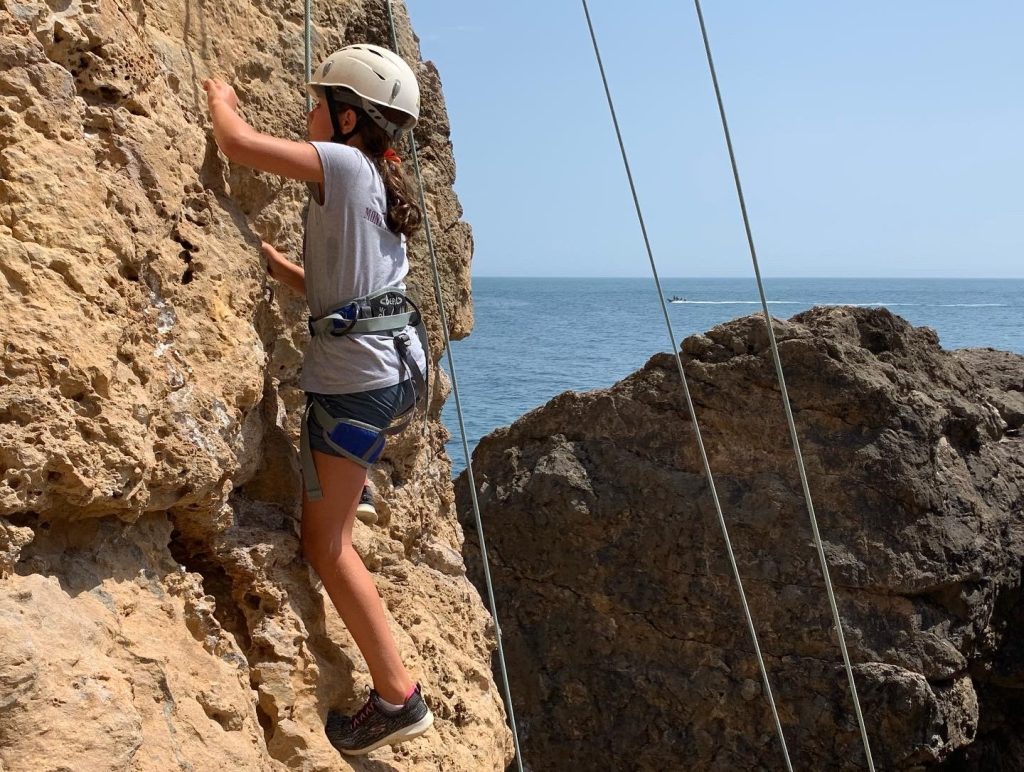
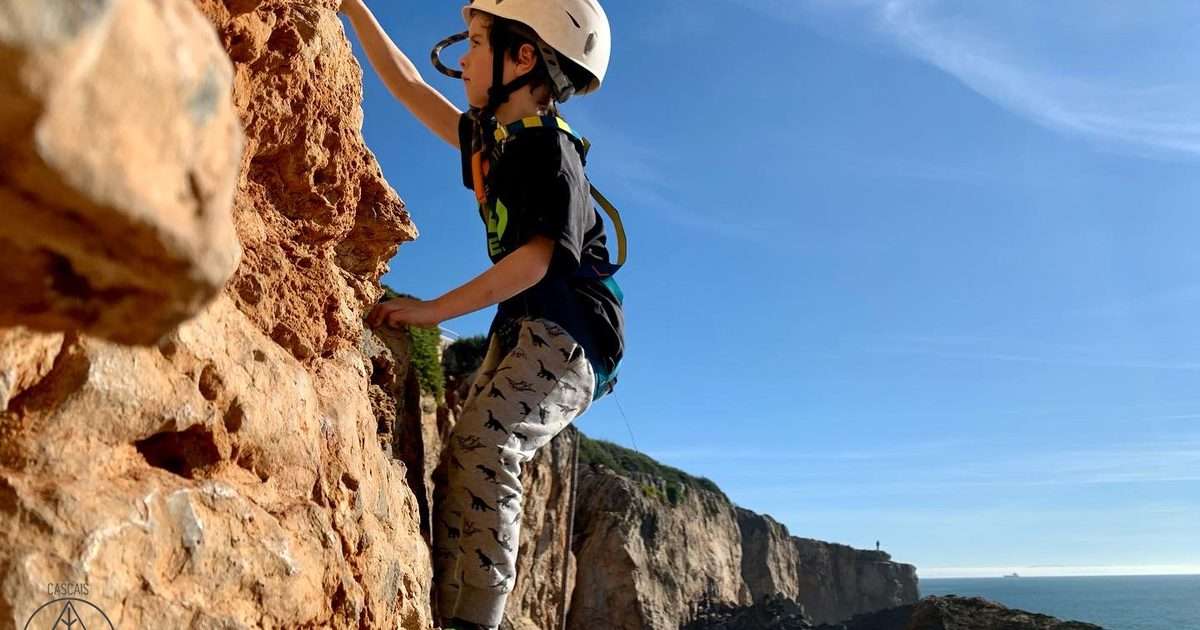
Rock climbing. Climbing is quiet, and it rewards calm. A route is a problem solved with the body, one hold at a time. Children who find team sports loud often find their feet here.
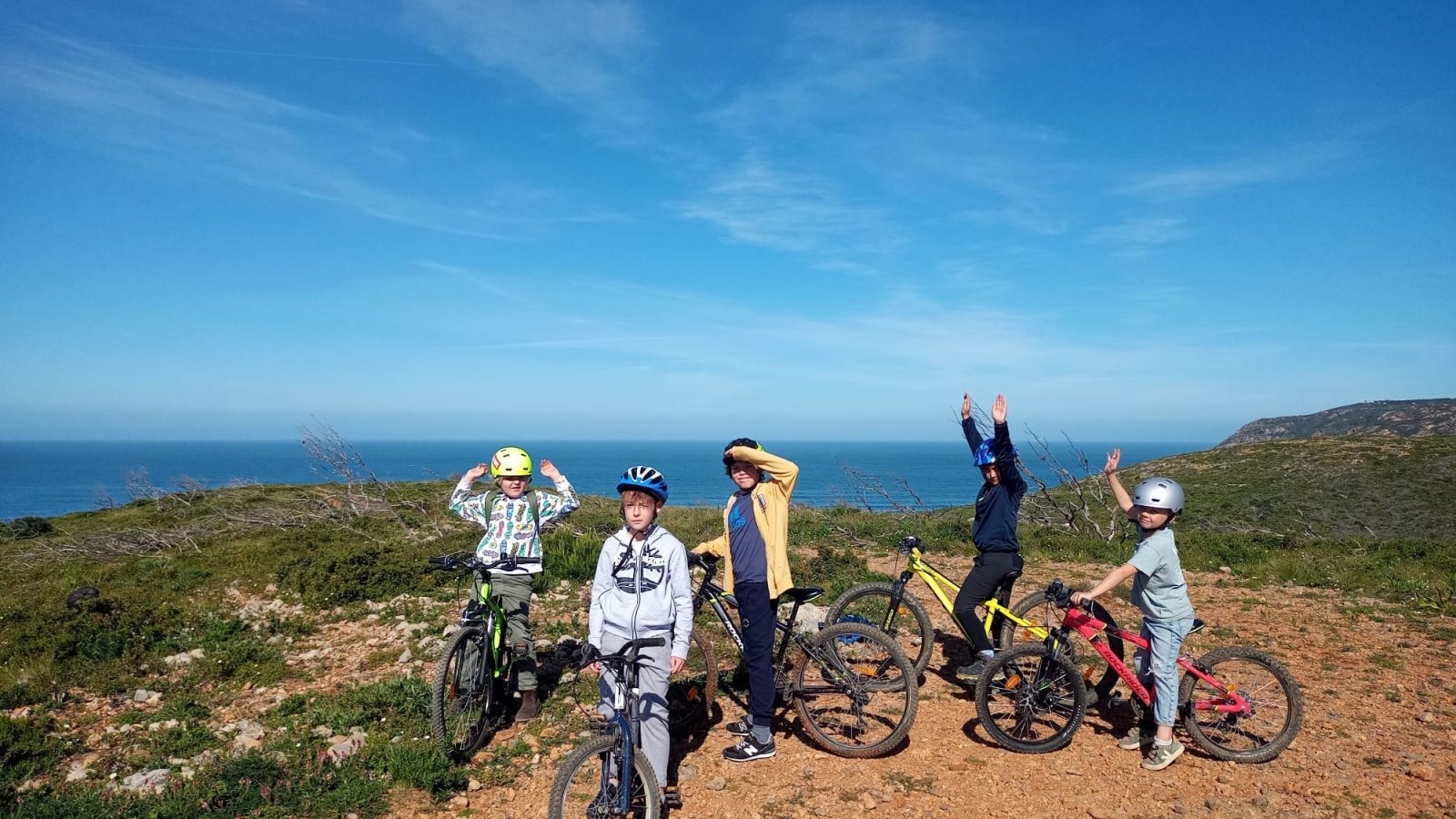
Mountain biking. Trails ask for balance, braking and a line chosen a few seconds ahead. The terrain between Cascais and the Sintra hills always has something harder to try. Progress is easy to feel, which is why they keep coming back.
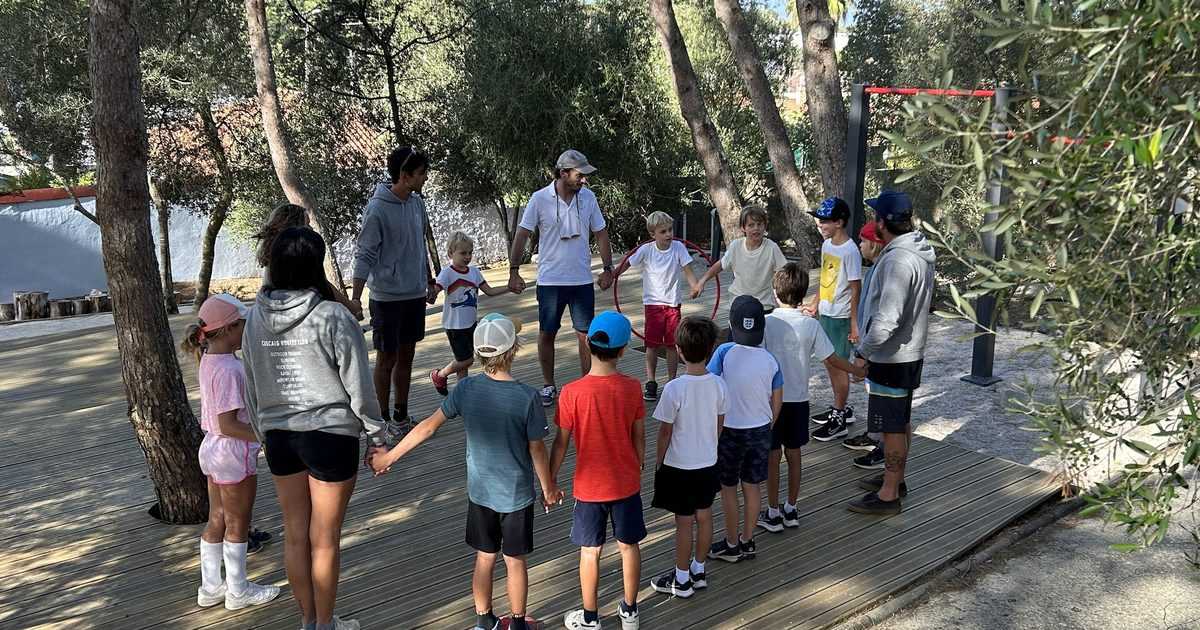
Multi-sports. A different challenge every week: surf, mountain biking, climbing, kayak, SUP, skate, orienteering. Instead of specialising early, children meet a new environment and a new kind of problem each time. This is the closest to how we think about childhood.
Parent review · Google · 5.0 stars, 182 reviews
“Every day was different, with great first experiences like surfing and rock climbing. They also did kayaking, biking and much more with a fantastic experienced team of counselors. All the counselors spoke English.”
Monique, grandmother of Yael (12) and Elisa (11)
Not sure which program? Ask us.
Tell us the age and what they are curious about and we will suggest a group.
More than off the screens
Getting kids off the screen is the easy way to sell an afternoon outdoors, and it undersells it. Nature, movement and adventure are a counterweight to a life that is mostly indoors, fast and lit by a display. A child who spends an afternoon a week in the wind and the water comes home with something a screen cannot hand over. Weather, effort, a little fear, and the calm that arrives afterwards.
The other half is social. The same group meets week after week, and friendships form well away from the classroom. Children help each other into a harness, wait for the slower rider and shout for a first wave. They belong somewhere that has nothing to do with marks or timetables. Families often tell us the group is the reason a child keeps going, long after the novelty of the sport has worn off. That is usually where confidence comes from, and it outlasts the skill itself.
What a good school-term week looks like
You do not need to fill every afternoon. A pattern that tends to hold for a whole term looks like this.
- One or two fixed outdoor sessions a week. Long enough for real progress, short enough to protect homework and sleep.
- Free play on the other days. The Paredão, the skate park, the garden. Unstructured movement counts.
- Screens after movement, not instead of it. You are picking the order, not banning anything.
One local note: do not let autumn cancel the plan. The Atlantic stays surfable, the Sintra hills stay rideable and the rock stays dry more days than not. A child in the right layers is comfortable outdoors here well past the end of summer. It is usually the adults who decide the season is over.
If you would rather not build it yourself
This is what we do, and we would rather say it plainly. Cascais Routes runs weekly After School outdoor programs for kids in Cascais and Sintra: surf and water activities, rock climbing, mountain biking, and multi-sports. School pick-up is included, so the routine does not add another stop to your afternoon. We have been doing it since 2014, and we still think the first ride of the school year is the best one.
We keep groups small, the same coaches come back every week, and we tell you honestly if a child should wait a season. That last conversation is never a fun one and it is always the right one.
Days, times and prices are on the After School page.
Sources: WHO guidelines on physical activity for children and adolescents aged 5 to 17; Hillman et al., Pediatrics, 2014 (nine-month after-school trial); after-school care cluster trial, Australia, 2020 (PubMed 32858523); systematic review of exercise and attention in school-age children with ADHD, 2023 (PubMed 37576338); Eurobarometer survey on teens’ screen use, European Commission, 2026; BMC Public Health, screen time in Portuguese children aged 3 to 10, 2020; screen time and physical activity in Portuguese students (PMC11957476).
Recommended activities
Frequently asked questions
How many hours of activity do children need per day?
The World Health Organization recommends at least 60 minutes of moderate to vigorous physical activity every day for children aged 5 to 17, plus activities that strengthen muscles and bones on at least three days a week. Two outdoor sessions of two hours each already cover more than half of that weekly total.
What age can kids join After School?
After School works mostly from age 6, and some 5-year-olds join after a quick assessment. We do not set an entry age per sport. Groups are formed by age, level, experience and how the group works together, and the challenge is then adapted to the children in it.
Can we try a class before committing to the term?
Yes. You can book a single session, paid as a one-off, before committing to a term. We would rather a child try one afternoon and decide than sign up for a term and dread it. Send us the age and the sport they are curious about and we will suggest the right group.
What happens when it rains?
Around Cascais and Sintra, rain rarely means cancelling. Kids ride, climb or surf in light rain with the right layers, and when a session genuinely cannot run safely we swap the sport or move the day. You will always hear from us before pick-up time.
Do you pick children up from school?
Yes. Weekly After School programs include pick-up from schools in the Cascais area, so the activity does not add a third stop to your afternoon. Confirm your school with us when you book.